
Sensitive Teeth: Why It Happens and How to Stop the Pain
That sharp jolt from cold water or ice cream isn't something to just live with. Here's what actually causes tooth sensitivity, and what genuinely helps.
If a sip of cold water or a bite of ice cream sends a sudden, sharp jolt through your teeth, you're dealing with tooth sensitivity — and it's extremely common. The good news is that in most cases it's very manageable once you understand what's actually causing it.
Why teeth become sensitive
Under the enamel and gum line, your teeth are covered in thousands of microscopic channels (dentinal tubules) that lead straight to the nerve. When they're exposed, hot, cold, sweet or even air can trigger pain. This happens because of:
- Worn enamel: from brushing too hard, acidic foods and drinks, or years of wear.
- Receding gums: exposing the root surface, which has no protective enamel at all.
- Whitening treatments: can cause temporary sensitivity, especially with strong or repeated use.
- A cracked tooth or recent dental work: sensitivity that's sudden, sharp, or limited to one tooth is worth a dentist's look, not a toothpaste fix.
What actually helps
Switch to a desensitizing toothpaste — and use it consistently
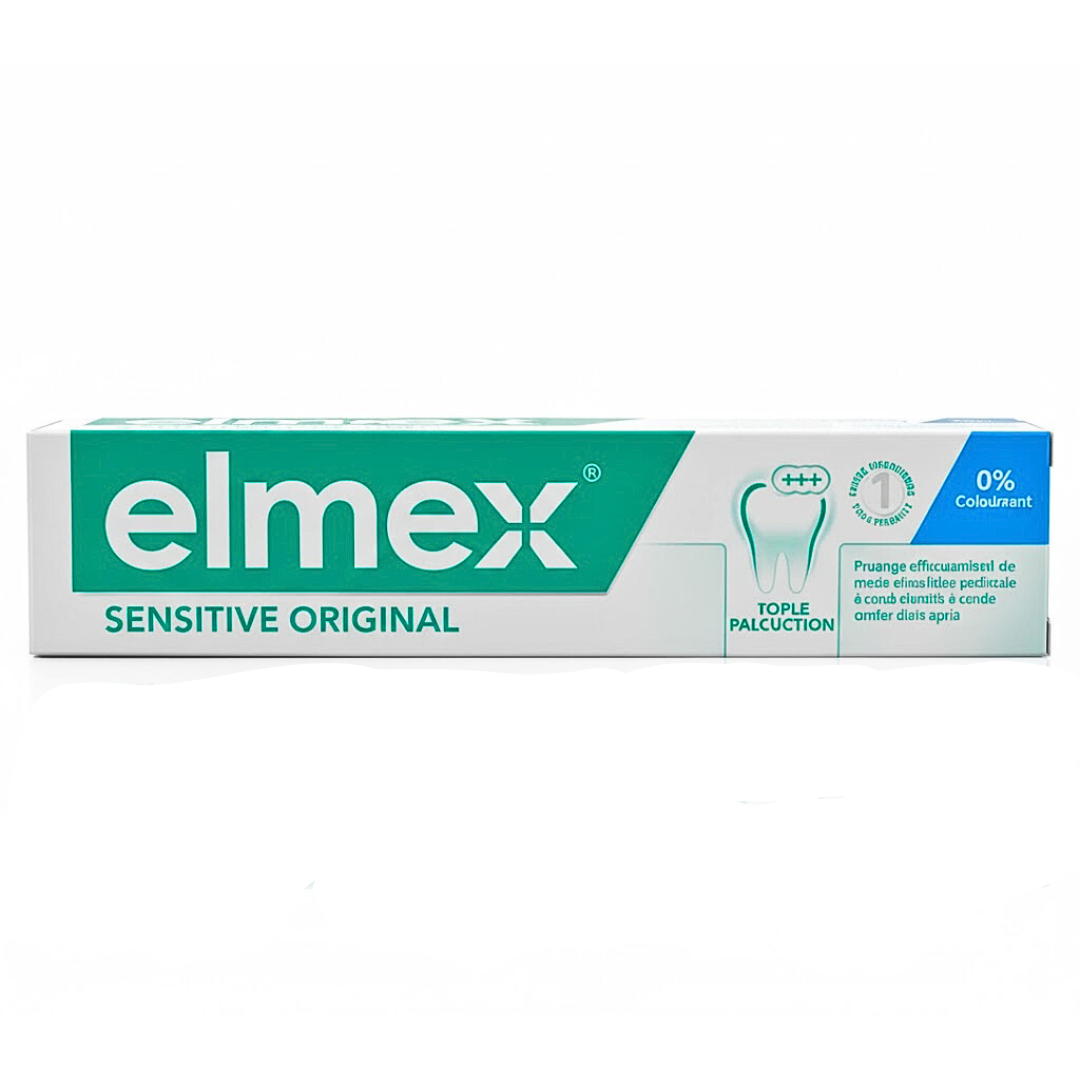
Desensitizing toothpastes work by gradually blocking those exposed tubules. The catch: they need daily use for 2 to 4 weeks before the effect really kicks in — it's not an overnight fix. Good options in our dentifrices range include Elmex Sensitive Original, Sensodyne Rapid Action (formulated to work faster), and President Sensitive.
Use a soft, dedicated toothbrush
A hard or worn-out brush is often part of the problem. Pair your toothpaste with a soft-bristle brush like the Sensodyne Precision Extra Soft, and browse our full manual toothbrush selection for soft and gentle options.
Fix your brushing technique
Pressing hard doesn't clean better — it wears enamel and pushes gums back, which is exactly what causes sensitivity in the first place. Brush gently, at a 45° angle to the gum line, for two full minutes, twice a day.
Watch the acid in your diet
Citrus fruit, soda, wine, and even sparkling water gradually soften and erode enamel. You don't need to eliminate them — just avoid brushing immediately after (wait 30 minutes) and rinse your mouth with water after acidic drinks.
When to see a dentist
- Sensitivity is severe, sudden, or limited to a single tooth.
- It doesn't improve after 3–4 weeks of consistent desensitizing toothpaste use.
- You notice a visible crack, a receding gum line, or swelling.
A dentist can apply professional fluoride treatments or sealants for cases that toothpaste alone can't resolve.
Frequently asked questions
How fast does sensitive toothpaste work?
Most people notice real improvement after 2 to 4 weeks of twice-daily use. Some formulas offer faster relief, but consistency matters more than the brand.
Can I use a whitening toothpaste if my teeth are sensitive?
Choose one specifically formulated for sensitivity first, and address whitening once the sensitivity is under control — whitening actives can otherwise make it worse.
Is sensitivity a sign of a cavity?
Not necessarily — most sensitivity is enamel-related, not decay. But persistent or localized pain should always be checked by a dentist to rule out a cavity or crack.
This article is for information only and doesn't replace a dentist's diagnosis. See a professional if pain is severe, sudden, or persists despite home care.